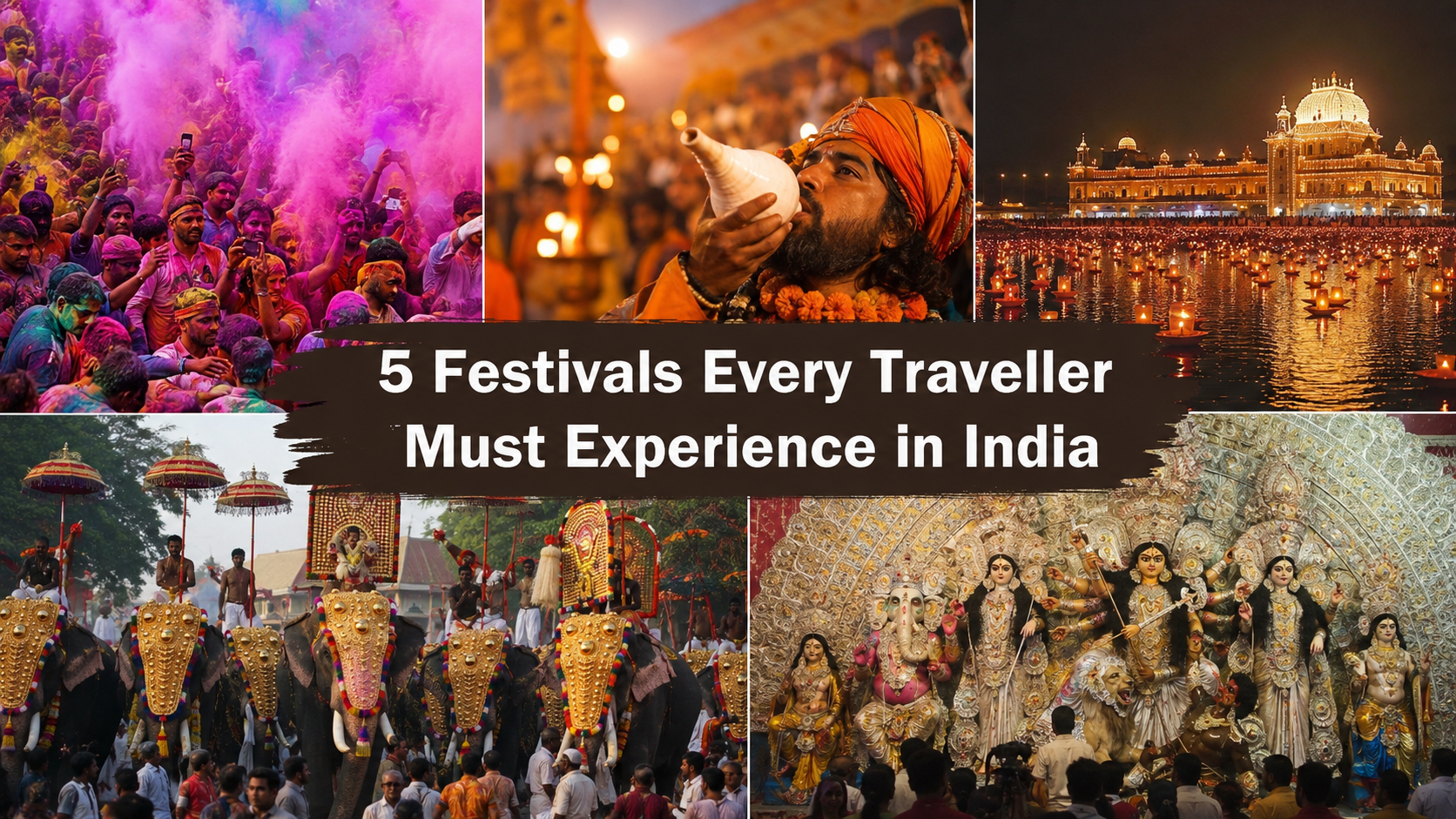
5 Festivals Every Traveller Must Experience
India does not celebrate festivals quietly. Every state has its own colours, its own stories, and its own way of making an ordinary calendar date unforgettable. If you’re the kind of traveller who plans trips around culture rather than just sightseeing, here are the festivals every traveller should experience at least once. Each one on this list has a history, a community, and a reason for being celebrated the way they are, and that’s exactly why they’re worth building a trip around.
At Voyagers Beat, we get a lot of questions about timing trips around festivals. So here is a proper list with dates, history, and what to keep in mind before you go.
1. Hemis Festival, Ladakh
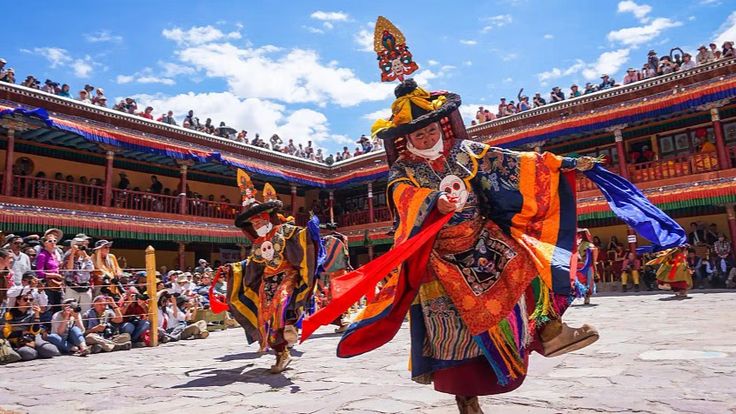
Hemis Festival is celebrated in Hemis Monastery, which is around 45 km away from Leh. It is one of the most colourful Buddhist celebrations in the Himalayas. The festival celebrates the birth anniversary of Guru Padmasambhava, a spiritual teacher believed to have spread Tantric Buddhism in the Himalayan region centuries ago. Monks in their bright silk robes and carved masks dance the Cham to the accompaniment of long horns, drums, and cymbals. The courtyard of the monastery is full of locals and travellers.
This year: Hemis Festival 2026 was held in June 2024-2025 and has already taken place this year. The festival is based on the Tibetan lunar calendar, so the dates move around a little bit each year, but it is usually sometime in June or July. If you missed it this year, the next edition is expected around the same window in 2027.
Things to keep in mind:
Book your stay and flights for Leh well in advance, as this time is peak tourist season for Ladakh.
Spend 2-3 days in Leh first to get acclimatized to the altitude before moving to Hemis
Dress modestly - this is an active monastery, not a showplace
2. Rann Utsav, Kutch
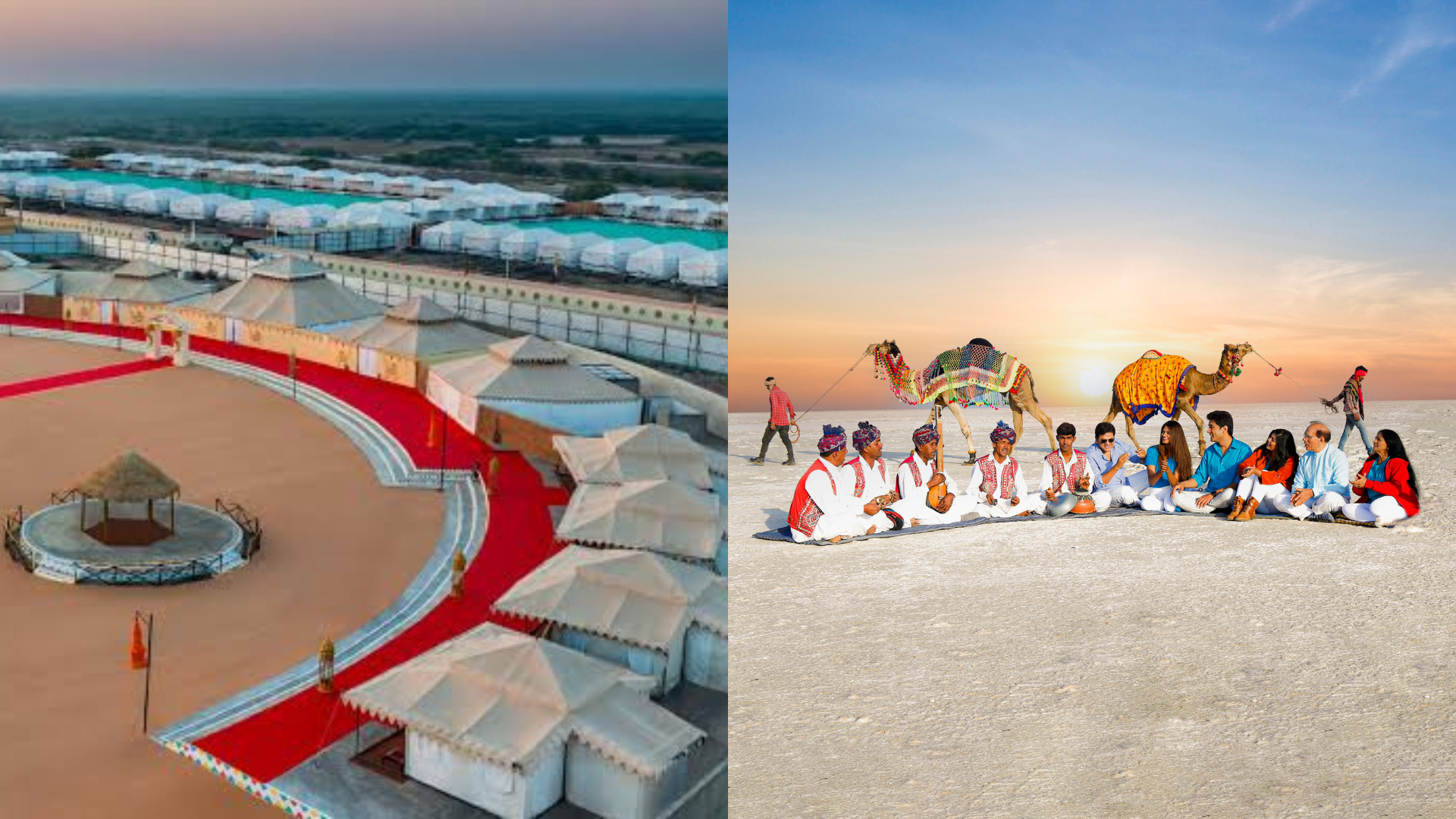
Rann Utsav happens on the white salt flats of Gujarat’s Great Rann of Kutch and is unlike any of the other festivals in this list. There is no one ritual or ceremony here. Instead, it’s a full season-long celebration of Kutchi culture, complete with a tent city, folk music, camel safaris, and a landscape that seems almost unreal once the salt crust dries and turns the desert completely white.
This year: Rann Utsav 2026-27 - From around November 1, 2026, to early March, 2027. The best time to visit is during the full moon nights in this window. The salt desert glows under the moonlight.
Things to keep in mind:
Book tent city accommodation early, especially on full-moon weekends, as they sell out fast
While days are warm, nights in the desert can be quite cold, so bring layers.
The main site at Dhordo is approximately 80 km from Bhuj so factor this distance into your travel time.
3. Hornbill Festival, Nagaland
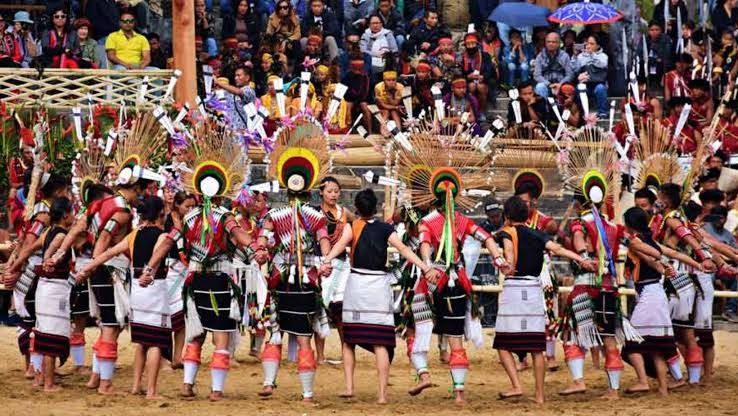
The Hornbill Festival is also called the Festival of Festivals, and if you see it, you will know why. It is held at Kisama Heritage Village near Kohima, bringing all the major Naga tribes on one stage, each with its own traditional houses, dances, food, and crafts. It started in 2000 as a state government initiative to bring together the many tribes of Nagaland and showcase their culture to the rest of the world and has since grown into one of the most significant cultural events in Northeast India.
This year: The Hornbill Festival 2026 will be held at the Kisama Heritage Village, some 12 km from Kohima, from December 1 to December 10. Unlike Hemis or Losar, these dates are fixed every year.
Things to keep in mind:
Indian travellers need an Inner Line Permit to enter Nagaland, so apply for it ahead of time
Mornings are best for tribal performances, while evenings bring live music and the Hornbill Rock Festival
December weather in Kohima is cool, so pack warm clothes for the evenings
4. Losar Festival, Himalayan Region
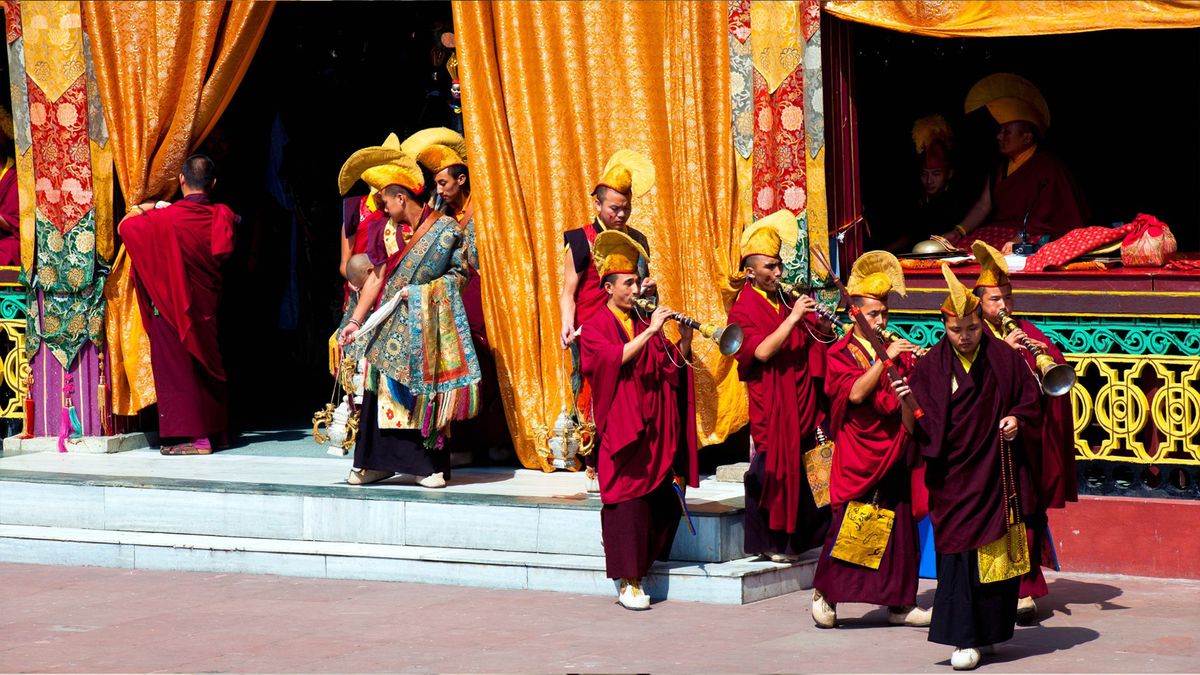
The Tibetan New Year, Losar, is celebrated widely across Ladakh, Sikkim, Dharamshala and McLeod Ganj in Himachal, Nepal, and Bhutan. The festival marks the start of the new year on the Tibetan lunar calendar and has its origins in pre-Buddhist times, when it was a winter celebration to honour local spirits and mark the changing seasons. Today it combines Buddhist rituals with family traditions; homes are decorated, honour flags are replaced, and dishes such as guthuk noodle soup are cooked to get rid of the old year.
This year: Losar 2026 was celebrated from February 18-20 and is already over for this year. Because it is based on the Tibetan lunar calendar, the dates change from year to year. The next Losar will be on 7th February 2027.
Things to keep in mind:
If travelling in winter, check road and flight conditions in advance, since many Himalayan routes have limited access
Respect monastery rules around photography during prayer ceremonies
Try to be a guest at a local celebration if invited, since Losar is largely a family- and community-festival
5. Kullu Dussehra, Himachal Pradesh
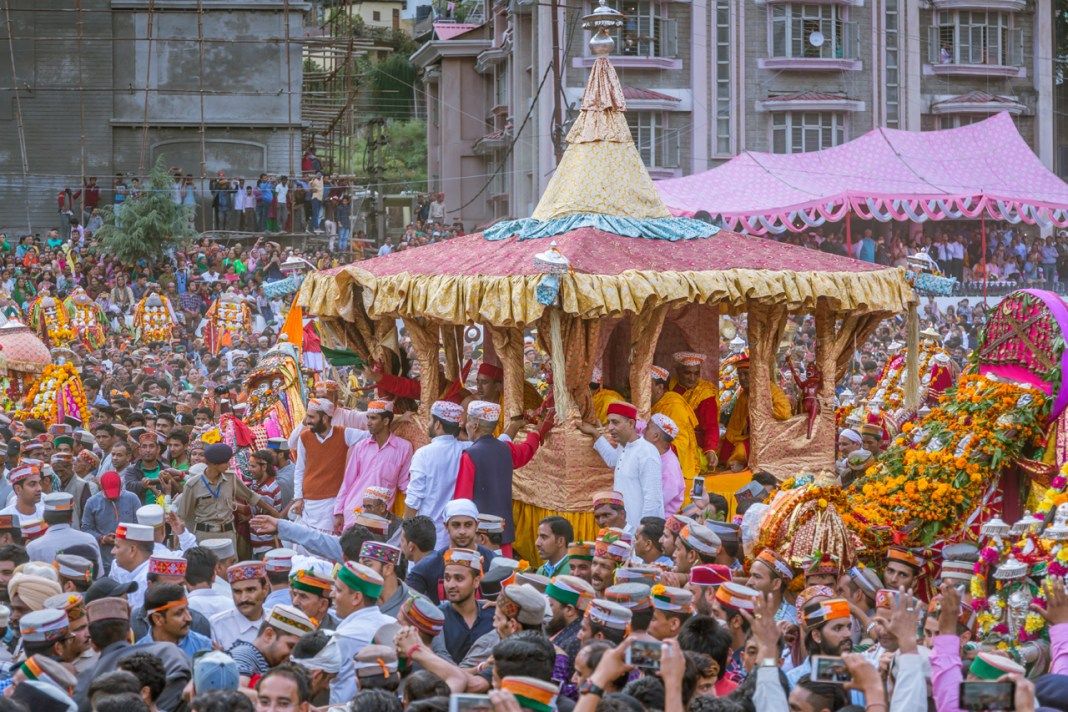
Kullu Dussehra is unlike any other festival in India. The rest of the country celebrates Dussehra on Vijayadashami, but in Kullu the festival begins a day later and lasts for nearly a week. The tradition goes back to the 16th century when Raja Jagat Singh, then the ruler of Kullu, brought an idol of Lord Raghunath from Ayodhya and installed him as the presiding deity of the valley. More than 200 local deities are carried on decorated palanquins from villages across the district to Dhalpur Maidan to pay their respects, turning the valley into a week-long open-air celebration of music, dance, and devotion.
This year: Kullu Dussehra 2026 begins around October 20 and goes for about a week, just after the major Dussehra celebrations of the rest of India are over.
Things to keep in mind:
Accommodation in Kullu fills up fast during this week, so book early
The procession days can get crowded, so keep valuables secure and stay with your group
Try the local Himachali food stalls that pop up around Dhalpur Maidan during the festival
Final Thoughts
These are not festivals you watch from the sidelines. Every masked dance at the Hemis Festival and tribal gathering at the Hornbill Festival, and you get a front-row seat to a tradition that has survived generations. It takes a little more effort than a regular holiday to plan your travel around these dates, but it’s what makes a normal trip a memory you take back home with you.
If Himalayan culture and offbeat travel excite you, do check out our guide to the world's highest post office in Spiti, or explore our 6-day Meghalaya itinerary for another side of India's cultural diversity.
So the next time you are planning a trip, do not just look at the weather. Look at the festival calendar too, because that is often where the real magic happens.
FAQs
Q1. Which is the best festival to experience Indian culture for first-time travelers?
The Hornbill Festival in Nagaland is a good starting point, as it is the confluence of many tribal cultures in one convenient location on fixed yearly dates.
Q2. Are any of these festivals permit-required to attend?
Yes, you need an Inner Line Permit for Hornbill Festival in Nagaland, and it's worth checking entry requirements for Ladakh before Hemis Festival as well.
Q3. How much time before should I plan a trip around these festivals?
As Rann Utsav and Kullu Dussehra are popular times to travel, it is recommended to book accommodation at least 2 to 3 months in advance.