10 Places to Visit in Spiti in Winter
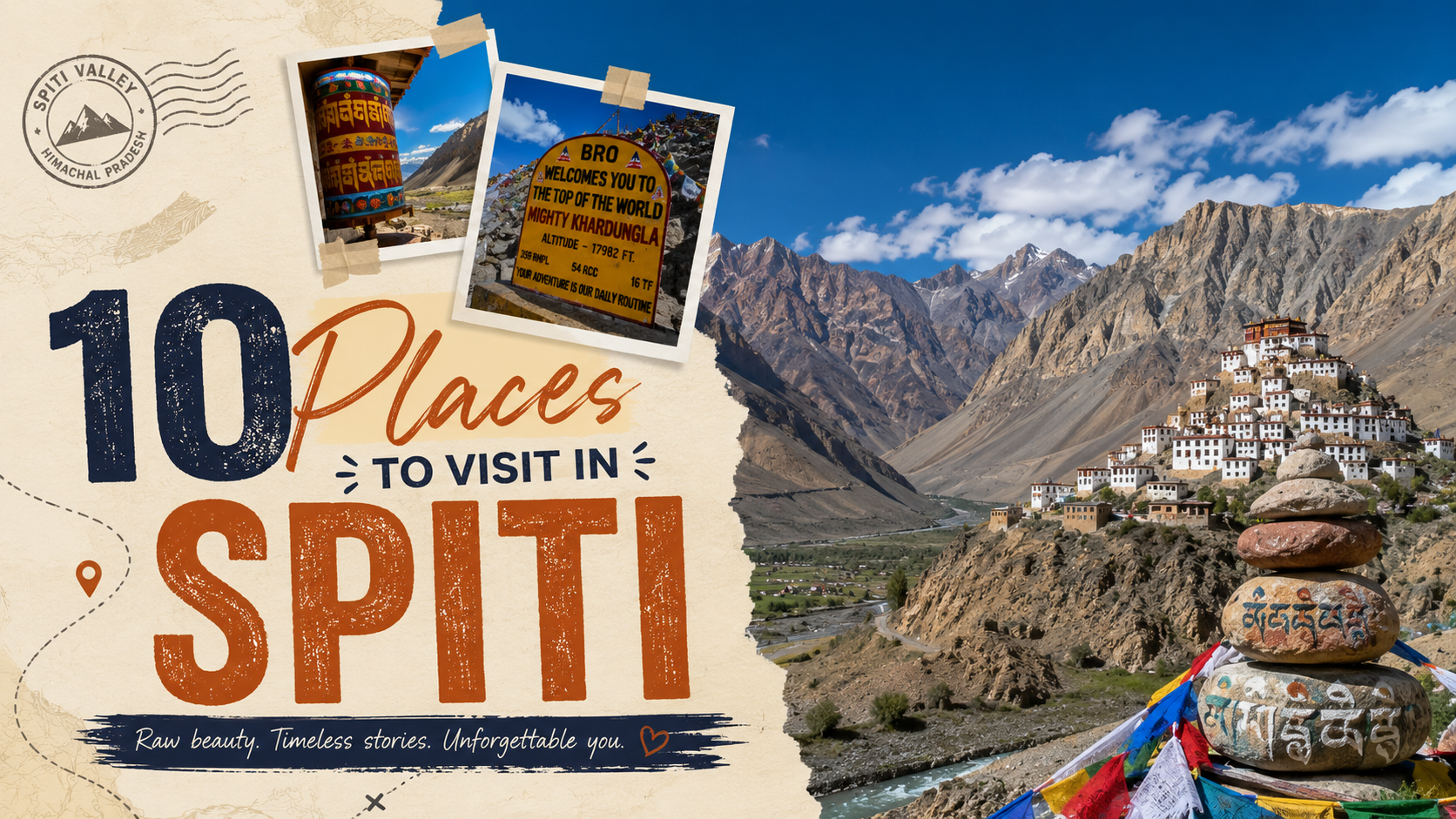
Spiti Valley looks like a different world once winter arrives. Rivers freeze, villages go quiet, and monasteries that usually blend into brown mountains stand out against fields of snow. If you're looking for the best places to visit in Spiti in winter, this guide covers ten spots, along with real, useful details: distances, altitude, what you'll actually see, and what to keep in mind before you go. Winter Spiti is beautiful, but it's not an easy trip. The cold is extreme, roads can shut without warning, and the air is thin. So plan well before you leave. For ready-made trip plans and local support, Voyagers Beat has been running winter Spiti trips for a while now.
Planning a Winter Spiti Trip?
Best for: Snow lovers, photographers, adventure travellers & wildlife enthusiasts
Winter season: Roughly December to March
Base: Kaza
Difficulty: Challenging
Temperature: Can drop far below freezing
10 Places to Visit in Spiti in Winter
A. Kaza
Quick Facts
Distance: Main town, everything else is measured from here
Altitude: Around 3,650 metres
What's there: Guesthouses, cafés, fuel pump, basic medical help, patchy mobile network
Good for: Your base for the whole trip
Almost every winter trip to Spiti starts and ends in Kaza. It's the biggest town in the valley, so once snow blocks the smaller villages, this becomes your main base. Many guesthouses shut for winter, but a few stay open with heated rooms, and a handful of cafés serve hot soup and butter tea.
From Kaza, you can plan day trips to Key Monastery, Kibber, Langza, and Hikkim, road conditions allowing. It's also the last stop with reliable fuel and basic medical help before you head to the smaller villages.
Why Visit in Winter? Kaza in winter has a calm you won't find in the busy tourist months, empty streets, snow on the rooftops, and hardly any traffic.
Quick Tip: Book a guesthouse with proper heating in advance. Not every place stays winter-ready.
B. Key Monastery
Quick Facts
Distance from Kaza: About 12 km (20–30 minutes by road)
Altitude: Around 4,166 metres
What's there: One of the region's oldest and largest monasteries, prayer halls, monk quarters
Good for: Photography, culture, a half-day visit
Key Monastery sits on a hilltop above the valley and is one of the most important Buddhist monasteries in the region, according to Himachal Tourism. In winter, its white walls almost blend into the snow, broken only by the deep red robes of monks walking between prayer halls.
The monastery stays open through winter. Visitors can usually walk through the courtyards and prayer rooms, though a few areas may be closed depending on the season.
Quick Tip: Visit early morning for the clearest light and the quietest atmosphere, before day-trippers arrive from Kaza.
C. Kibber
Quick Facts
Distance from Kaza: About 19 km (40–50 minutes by road)
Altitude: Around 4,270 metres
What's there: Stone houses, wide open slopes, snow leopard habitat
Good for: Wildlife spotting with a local guide
Kibber is a high-altitude village known for one thing above all else: it sits right in snow leopard country. Winter is when snow leopards move down to lower ground in search of food, so wildlife trackers set up base here and in nearby villages during these months.
Sightings are never guaranteed, this is wild, open terrain, not a safari park, so it takes patience, warm clothing, and long hours of waiting.
Wildlife Note: Always go looking for wildlife with experienced local guides who understand animal behaviour and terrain. Keep a safe distance, avoid loud noise, and never try to lure an animal for a photo.
D. Chicham Bridge
Quick Facts
Distance from Kaza: About 18 km, near Kibber
Height: One of the highest bridges of its kind in Asia, spanning a deep gorge
What's there: A suspension bridge connecting Kibber and Chicham villages
Good for: A quick, dramatic photo stop
Chicham Bridge crosses a deep gorge between Kibber and Chicham village. In winter, the drop below often disappears under snow and mist, which makes the crossing feel even more dramatic than usual. It's usually combined with a Kibber visit since both are close together.
Photo Tip: Shoot from the Kibber side in the early afternoon, when light falls on the gorge without harsh shadows.
Caution: Cross carefully in icy conditions, and check with your driver about road status before heading out.
E. Langza
Quick Facts
Distance from Kaza: About 14 km (30–40 minutes by road)
Altitude: Around 4,400 metres
What's there: A large golden Buddha statue, marine fossils in the soil, mud-brick homes
Good for: Photography and a slower village walk
Langza is known for two things: a huge Buddha statue watching over the village, and marine fossils called ammonites that turn up in the soil nearby, proof this whole area was once under an ancient sea. In winter, the village empties out and snow usually covers the fossil fields.
Note: Don't treat Langza as just a photo stop. If locals are around, walk through the village. It shows you how life continues here through the cold months.
F. Hikkim
Quick Facts
Distance from Kaza: About 16 km (35–45 minutes by road)
Altitude: Around 4,440 metres
What's there: One of the highest post offices in the world
Good for: A quick stop combined with Komic and Langza
Hikkim's post office is a well-known stop for travellers, but in winter, its opening hours and even whether it's open at all can depend on weather and staffing. So it's best not to plan your whole day around it without checking first.
Worth Knowing: Winter hours at Hikkim's post office can be irregular. Check the current status locally or with your travel operator before you go.
G. Komic
Quick Facts
Distance from Kaza: About 18 km (40–50 minutes by road)
Approx. altitude: Around 4,500 metres (varies by source)
Experience: Remote, high-altitude, very quiet
Best for: Landscape photography and solitude
Winter tip: Spend a day or two acclimatizing in Kaza before heading up
Komic is often called one of the highest motorable villages in the region, though the exact ranking depends on who you ask, so it's best not to treat that as fixed fact. What is certain is the altitude, thin air, wide mountain views, and a silence that's hard to find anywhere else.
H. Tabo
Quick Facts
Distance from Kaza: About 47 km (1–1.5 hours by road)
Altitude: Around 3,280 metres (lower than Kaza, easier to reach)
What's there: A monastery dating back to 996 AD, old wall paintings and manuscripts
Good for: History, culture, a calmer pace than Kaza
Tabo sits lower in the valley, which makes it a bit easier to reach even when snow blocks the higher villages. Its monastery, according to Himachal Tourism, goes back to 996 AD, making it one of the oldest Buddhist monasteries still in use in the Himalayas.
Winter mornings here feel genuinely quiet, mist over the fields, monks moving between mud-walled buildings, hardly any outside visitors.
Why It Stands Out: Tabo's wall paintings and manuscripts, some over a thousand years old, are among the most important surviving pieces of Buddhist art in the region.
I. Dhankar
Quick Facts
Distance from Kaza: About 32 km (1 hour by road)
Altitude: Around 3,894 metres
What's there: A cliffside monastery, once the capital of the old Spiti kingdom
Good for: Dramatic views, a short but memorable stop
Dhankar Monastery sits on a cliff edge above where the Spiti and Pin rivers meet. In winter, the frozen rivers below and the snow-covered cliffs make it feel even more dramatic than in summer, when the slopes around it are dry and brown.
The road here can be affected by ice and snow, so check with local drivers before planning the drive. Winter visits tend to be shorter than summer ones, the cold discourages long stops, but the views still make it worth the trip.
Note: The ground near the cliff edges gets slippery in winter. Sturdy, grip-soled shoes matter here more than almost anywhere else on this list.
10. Pin Valley & Mud Village – Spiti's Winter Wilderness
Quick Facts
Distance from Kaza: About 45 km to Mud Village (1.5–2 hours by road)
What's there: Pin Valley National Park, home to snow leopards, Himalayan ibex, and cold-adapted birds
Good for: A quieter, more remote experience than the main valley
Pin Valley branches off the main Spiti road into one of the most remote parts of the region, centred around Mud Village. In winter, it feels noticeably more cut off than Kaza or Key. Snow cover is heavier here, and fewer travellers make the detour, which is exactly why some people prefer it.
Travel Note: Check road access to Mud Village before planning your route. Conditions here can change faster than in the main valley.
Which Place Should You Visit in Spiti in Winter?
This isn't a scientific ranking. Use it as a quick reference if road conditions or time limit how much of the valley you can see.
Things to Know Before Visiting Spiti in Winter
Temperatures can drop to around -20°C or lower in parts of the valley, according to Himachal Tourism
Roads can close for a while after fresh snow, especially on higher routes like Komic and Langza
Spend a day or two in Kaza to get used to the altitude before heading higher
Pack proper layered clothing: thermals, a fleece layer, and a heavy outer jacket
Wear waterproof, insulated winter shoes, regular trekking shoes won't be enough
Carry gloves, woollen socks, and a warm cap, hands and feet get cold fastest
Power supply can be unreliable in smaller villages, so carry a power bank
Mobile network is limited and unreliable once you're beyond Kaza
Carry your regular medicines, pharmacies are rare outside Kaza
ATMs can't be relied on, so carry enough cash for the whole trip
Look into travel insurance that covers high-altitude areas
Check weather and road conditions daily before changing your route
Travel with a driver or local operator who knows winter conditions well
How to Plan These Places Into a Winter Spiti Trip
Trying to fit all ten places into a rushed two-day trip usually doesn't work. Distances look short on a map, but they take much longer in real life once snow and altitude come into play. A more realistic pace looks like this:
Day 1–2: Travel to Spiti and reach Kaza using a winter-accessible route
Day 3: Explore Kaza and visit Key Monastery
Day 4: Head to Hikkim, Komic, and Langza
Day 5: Visit Kibber and Chicham Bridge
Day 6: Explore Tabo and Dhankar, or start your return journey depending on conditions
This is just a rough guide. Your actual Spiti Valley winter itinerary will depend on snowfall, road closures, and local rules at the time of your trip, so keep some flexibility instead of fixing every day in advance.
If you'd rather not plan this yourself, Voyagers Beat's Spiti Valley in Winter travel guide and dedicated Winter Spiti Expedition itineraries already cover routes through Komic, Hikkim, Langza, Key, Kibber, Chicham, Tabo, and Dhankar. If you want to combine this with a longer loop, check the Spiti Circuit trip and the Spiti Valley Road Trip 2026. And if you're starting from the capital, this guide on how to reach Spiti Valley from Delhi covers the route step by step.
Conclusion
Winter turns Spiti into a version of itself most travellers never see, quieter villages, frozen rivers, and monasteries standing alone against the snow. It isn't the easiest season to travel in. The cold is real, roads can shift without warning, and altitude demands respect. But with the right planning, it's one of the most rewarding ways to see these places to visit in Spiti in winter. Pack warm layers, keep your expectations realistic, and travel with a driver who knows the terrain. If you'd like help with the planning, Voyagers Beat's winter Spiti itineraries are a good place to start.
Conclusion Image File Name: spiti-valley-winter-sunset-mountains.jpg Alt Text: Snow-covered Himalayan peaks glowing under a winter evening sky in Spiti Valley Caption: As the sun sets over Spiti's frozen peaks, the valley settles into its quiet winter rhythm.
Frequently Asked Questions
1. Is Spiti Valley safe to visit in winter? Yes, if you plan well. Roads can close after snowfall and temperatures drop far below freezing, so travel with an experienced local driver and pack proper warm clothing.
2. Which are the best places to visit in Spiti in winter? Kaza, Key Monastery, Kibber, Langza, Komic, Hikkim, Tabo, Dhankar, and Pin Valley. How easy each one is to reach depends on snowfall at the time of your visit.
3. What is the best month to visit Spiti in winter? December has early snow with easier roads. January and February bring the heaviest snow and coldest temperatures. March is slightly milder as some roads reopen.