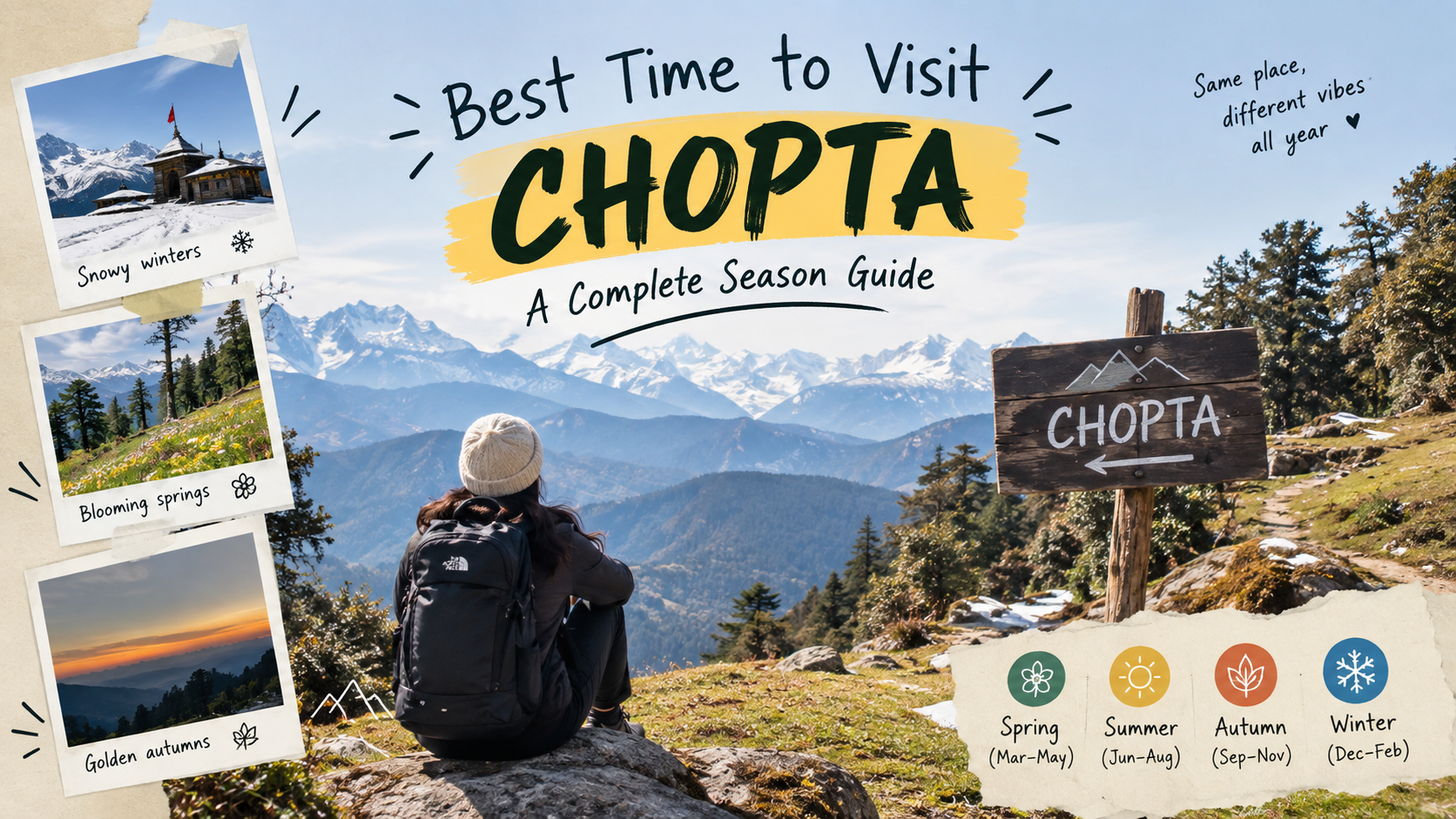
Best Time to Visit Chopta: A Complete Season Guide
If you're planning a trip and searching for the best time to visit Chopta, here's the short answer: April to June and September to November are your safest bets for clear skies and easy trekking.
Chopta sits at around 2,680 metres in Uttarakhand's Rudraprayag district and is the base camp for the Tungnath-Chandrashila trek, home to the world's highest Shiva temple.
Because the temple only opens part of the year and trail conditions shift with the weather, timing changes almost everything about the trip. At Voyagers Beat, we've taken groups to Chopta across every season, from summer meadows to snow treks in January, and each one has its own personality. Here's a proper season-by-season breakdown so you can pick the right one for you.
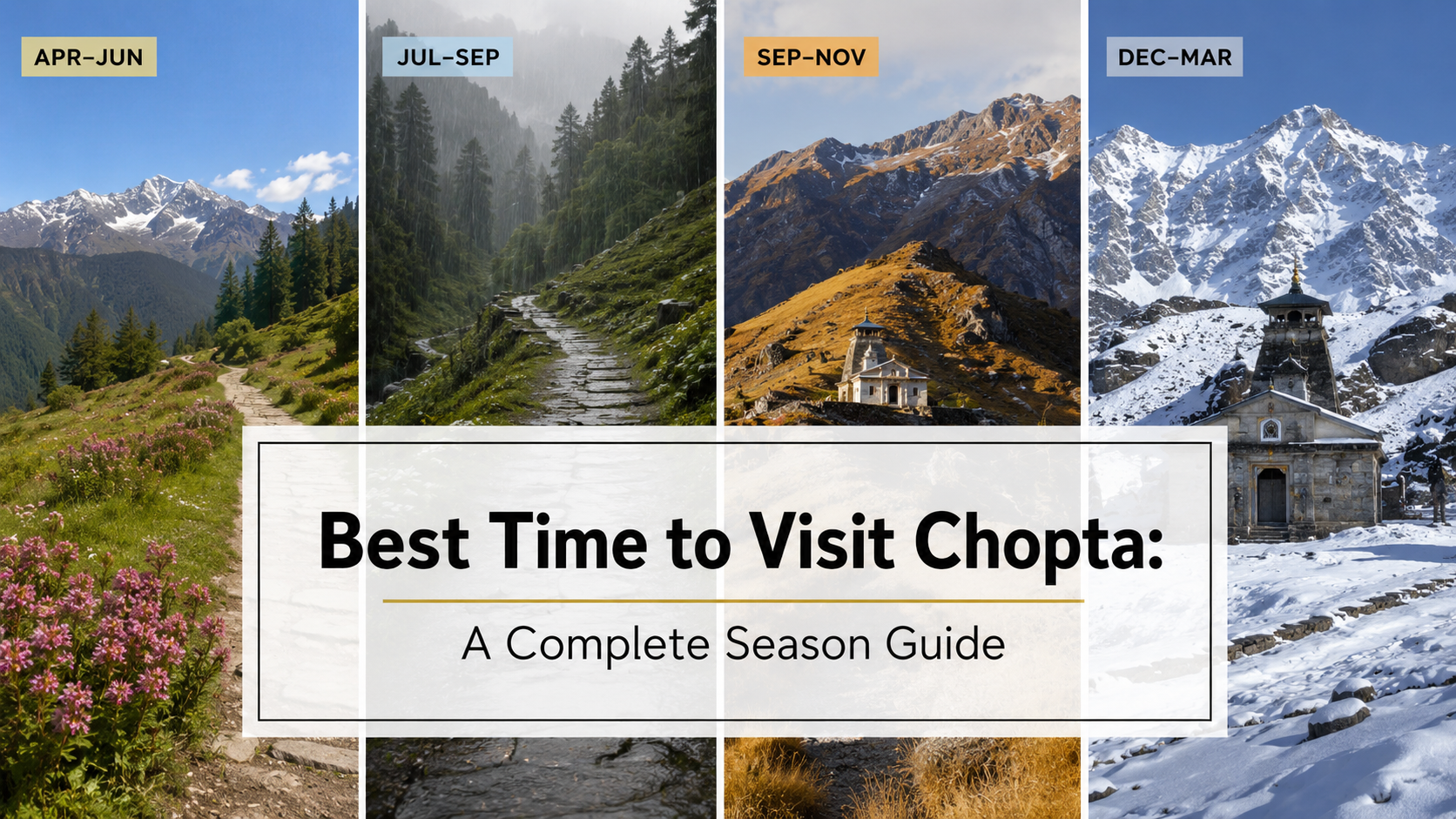
Summer in Chopta (April to June)
This is peak season, and for good reason.
Temperatures are comfortable at around 10°C to 25°C
The Tungnath temple is open, making this the best time for the Chopta-Tungnath-Chandrashila trek
In June, meadows turn lush green, and rhododendrons bloom bright red along the trail
This is the most beginner-friendly season - trails are dry and easy to walk
It's also the busiest time, so demand for camps and stays runs high
We generally recommend this season for first-timers on a Himalayan trek. You get superb views of peaks like Chaukhamba and Nanda Devi. Summer is also a good time to add on the short, easy walk to Deoria Tal.
What to pack for summer
Light woollen clothes for the evening - it gets cold after sunset
A cap and sunscreen - the sun is stronger than expected at this altitude
Comfortable trekking shoes with decent grip
Monsoon in Chopta (July to September)
This is the one season most people should plan around, not plan for.
Trails are slippery in the rain, especially the steep Tungnath-to-Chandrashila stretch
Views are limited - even on a good day you may not see much of the mountains
The road to Chopta itself stays open, since it's now an all-weather road
If you do come in monsoon, treat it as a nature and photography trip, not a serious trek
Some travellers love the misty, green look of the valley - just don't plan a summit push to Chandrashila
What to pack for monsoon
A good raincoat, not just an umbrella
Waterproof trekking shoes or gaiters if attempting the trek
A dry bag or waterproof cover for your camera and phone
Autumn in Chopta (September to November)
If you're looking for clear views of the Himalayas, this is possibly the best time to visit Chopta.
Monsoon clears out completely, giving the clearest views of the mountains all year
Temperatures fall to around 5°C to 20°C
Crowds are visibly thinner than in summer
By late November, the first snow appears on the higher peaks as a dramatic backdrop
This window is a favourite of photographers and repeat trekkers who've already done the summer version and want the same trek to feel completely different.
What to pack for autumn
A heavier jacket, especially for early mornings and after dark
Layered, adjustable clothing for the day
A good camera - this is the season for the clearest mountain shots
Winter in Chopta (December to March)
Winter turns Chopta into an entirely different destination.
The region is covered by heavy snow, particularly between January and March
Temperatures can drop as low as -5°C, and it feels colder still at night
The Tungnath temple closes, and the idol is taken to Makkumath village for winter
Snow trekking to Chandrashila is still possible and is one of the most memorable versions of this trek, but it needs proper gear and is better suited to trekkers who've done at least one Himalayan trek before
Heavy snowfall can block some routes, so flexibility is key
If snow, silence, and a trail that bears no resemblance to the postcard summer pictures appeal to you, this is your season. Come prepared - grippy trekking shoes, layered woollens, and a buffer day. Since Auli is close by and one of India's best winter skiing spots, many travellers combine the two destinations in one trip.
What to pack for winter
Heavy woollens, thermals, and a proper down jacket
Waterproof trekking shoes with solid grip for snow and ice
Gloves, a woollen cap, and sunglasses for snow glare
Where to Explore Near Chopta
Chopta is small, but the area around it has a lot to offer, and the best nearby spots also change with the season.
In summer & autumn (April-June, September-November)
Tungnath and Chandrashila are at their best in these months - the temple is open, the trail is dry, and the summit view is at its clearest
Deoria Tal is a peaceful forest lake, an easy add-on trek for a slower, quieter day away from the main trail
Kanchula Korak Musk Deer Sanctuary, close to Chopta, is worth a short visit if you enjoy wildlife and birdwatching
In winter (December-March)
Auli is only a few hours away and turns into one of India's top skiing spots this season - it pairs naturally with a Chopta snow trek. Our Auli Chopta Tungnath package is built exactly for this combination
If snow blocks the Chopta trail on a particular week, many trekkers switch to Kedarkantha, another beginner-friendly snow trek in Uttarakhand with near-daily departures - see our Kedarkantha Snowtrek package
All year round
Ukhimath, the winter seat of the Tungnath deity, is worth a stop if you're interested in local temple culture and history
If you want a longer, quieter Himalayan trek, the Har Ki Dun Trek nearby is a good option, especially if Chopta feels too crowded during peak weeks
Which Season Should You Actually Pick?
These timelines are in line with official Uttarakhand Tourism data for Chopta, so you can plan with confidence.
Tungnath can be crowded on summer weekends, especially on long weekends and holiday seasons, with long queues near the temple. If a quieter trail matters more to you than perfect weather, autumn weekdays are usually your best bet. Winter, especially in January and early February, tends to attract fewer casual tourists, as the cold and snow weed out anyone not really up for a proper trek - meaning a quieter, more intimate experience for those who do go.
Conclusion
Once you've picked your season, the next step is sorting out logistics. We've already covered how to reach Chopta from Delhi in detail, including road routes and bus options.
If you don't want the hassle of planning, our Chopta Chandrashila Trek package takes care of stays, permits, and guided trekking, timed for the best season for you. It's the same trip our own groups have done over the summer, autumn, and winter batches.
For more on the trek's spiritual significance, Tungnath Temple's Wikipedia page has some interesting background on why it's considered the highest Shiva temple in the world.
Regardless of how long you stay, the trip itself doesn't change much in structure - it's a short, scenic climb through forest and meadow, leading up to one of the most rewarding views in the Garhwal Himalayas. It's the feel of it that changes: green and busy in summer, sharp and clear in autumn, misty and raw in monsoon, or silent and white in winter. Knowing exactly how each season looks on the ground makes it a lot easier to choose the right one.
FAQs
Is Chopta open all year round?
Yes, the town itself is open year-round. The opening of the Tungnath temple and the safety of the higher sections of the trek vary each season.
Can beginners trek to Chandrashila in winter?
It can be done, but not easily. Winter trekking involves snow, ice, and colder conditions, so it's best suited to trekkers with some prior experience or a guided group with proper gear.
How far is Chopta from Delhi, and how high up is it?
Chopta is approximately 2,680 metres above sea level and about 450 km from Delhi. You can read the full route breakdown in our how to reach Chopta from Delhi guide. For more background on the region, Chopta's Wikipedia page is a useful starting point.