
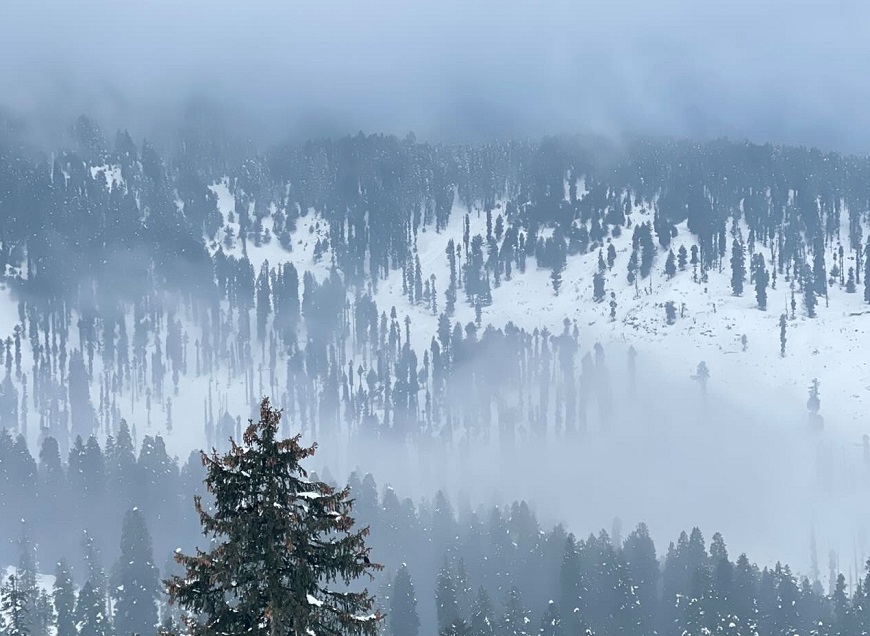
South India, known for its lush greenery, tropical beaches, rich culture, and historic temples, often brings to mind images of warm weather, coconut palms, and monsoons. Snowfall, a common phenomenon in the northern Himalayan regions of India, is virtually unheard of in the southern peninsula. But does that mean it never snows in South India? Let’s explore.
The Climatic Conditions of South India
South India lies largely in the tropical zone and includes the states of Andhra Pradesh, Karnataka, Kerala, Tamil Nadu, and Telangana. The region enjoys a tropical monsoon climate, characterized by:
-
Hot summers (March to June)
-
Monsoon rains (June to September)
-
Mild to warm winters (October to February)
Due to its geographical location and elevation, most parts of South India experience warm temperatures throughout the year. The proximity to the equator also limits the drop in winter temperatures.
Altitude Matters
While snow requires sub-zero temperatures, most of South India is either at sea level or in low-lying areas. However, parts of the Western Ghats—especially in Karnataka, Tamil Nadu, and Kerala—do rise to significant elevations. Hill stations like:
Ooty (Tamil Nadu) – 2,240 meters above sea level
Kodaikanal (Tamil Nadu) – 2,133 meters
Munnar (Kerala) – 1,532 meters
Chikmagalur (Karnataka) – 1,090 meters
These places experience relatively cooler temperatures, especially in winter. During the coldest months (December–January), early morning frost is possible, and temperatures can dip below 5°C. But snowfall? Not quite.
Has It Ever Snowed in South India?
There are no verified reports of actual snowfall in any part of South India. What has occasionally happened is hailstorms—especially in the hilly areas—which some people may confuse with snow. Hailstones form during severe thunderstorms and can create a white coating on the ground, but they’re not the result of sustained low temperatures like snow is.
Occasionally, places like Munnar and Ooty report heavy frost or mist so dense that it mimics the ambiance of a snowy landscape. This has led to tourist myths of “snowfall in South India,” but meteorologically speaking, it’s just cold mist, frost, or hail.
So, Is Snowfall Possible in the Future?
Given current climate trends, natural snowfall in South India is unlikely unless there’s a dramatic shift in global weather patterns. That said, artificial snow is used in amusement parks, malls, and tourist attractions like Snow World in Hyderabad and Bangalore, where visitors can experience snow-like conditions indoors.
Which Island Group of India Lies to Its South-East?
India is home to two major island groups:
-
Andaman and Nicobar Islands
-
Lakshadweep Islands
Of these, the Andaman and Nicobar Islands lie to the southeast of the Indian mainland, in the Bay of Bengal.
Geography and Location
The Andaman and Nicobar Islands are a chain of around 572 islands, only some of which are inhabited. Geographically:
-
They lie roughly 1,000–1,200 km southeast of the Indian mainland.
-
The capital of this union territory is Port Blair.
-
The islands extend between the 10° to 14° North latitude and 92° to 94° East latitude.
The island chain is divided into two major groups:
-
Andaman Islands – located to the north
-
Nicobar Islands – located to the south
The two groups are separated by the Ten Degree Channel.
Strategic Importance
Due to their location, these islands hold immense strategic and ecological importance:
They are closer to Southeast Asia than the Indian mainland.
They serve as a naval and air force hub.
They help India monitor shipping lanes through the Malacca Strait, a crucial international maritime passage.
Natural Beauty and Biodiversity
The Andaman and Nicobar Islands are renowned for their pristine beaches, coral reefs, and tropical rainforests. Some of the highlights include:
Radhanagar Beach on Havelock Island – often rated among the best beaches in Asia
Cellular Jail – a colonial prison used by the British
Baratang Island – known for limestone caves and mangrove forests
Great Nicobar Biosphere Reserve – a biodiversity hotspot
The islands are home to indigenous tribes like the Sentinelese, Nicobarese, and Shompens, some of whom live in complete isolation.
Accessibility
You can reach the Andaman and Nicobar Islands by:
Air – Regular flights from Chennai, Kolkata, and Delhi to Port Blair
Sea – Ships operate from Chennai, Vizag, and Kolkata (journey takes around 60–70 hours)
How Many States Are There in South India?
South India comprises five states and one union territory. These are:
The Five Southern States
-
Andhra Pradesh
Capital: Amaravati (proposed), administrative functions in Vijayawada and Hyderabad
Language: Telugu
Coastline: Long stretch along the Bay of Bengal
-
Karnataka
Capital: Bengaluru (also known as the “Silicon Valley of India”)
Language: Kannada
Famous for: Tech industry, heritage sites like Hampi, Coorg hill station
-
Kerala
Capital: Thiruvananthapuram
Language: Malayalam
Known for: Backwaters, Ayurveda, literacy rate, and natural beauty
-
Tamil Nadu
Capital: Chennai
Language: Tamil (one of the world’s oldest classical languages)
Cultural heritage: Ancient temples, Carnatic music, Bharatanatyam
-
Telangana
Capital: Hyderabad
Language: Telugu (also Urdu in some regions)
Formed in 2014, making it the youngest southern state
Union Territory in South India
Puducherry (Pondicherry)
-
Comprises four small districts: Puducherry, Karaikal, Mahe, and Yanam
-
Former French colony with distinct architecture and culture
-
Official languages: Tamil, Telugu, Malayalam, French, and English
So, while we often speak of the “five South Indian states,” it’s important to remember Puducherry also plays a significant role in the region’s cultural and historical landscape.
Summary
South India, with its vibrant diversity, continues to enchant both locals and visitors. Here’s a quick recap of the key takeaways:
Snowfall in South India is extremely rare and practically nonexistent in natural settings due to the region’s tropical climate. However, frost, hail, and mist in hill stations can give a snowy feel during winter.
The Andaman and Nicobar Islands, lying to the southeast of mainland India in the Bay of Bengal, are a strategic and ecological treasure.
Five Indian states—Andhra Pradesh, Karnataka, Kerala, Tamil Nadu, and Telangana constitute South India, along with the Union Territory of Puducherry.
From misty hills to coastal plains and island paradises, South India is a region of endless discovery. Whether you’re chasing monsoons, exploring tea gardens, diving into temple architecture, or wondering about snow in the tropics, South India offers layers of surprise and wonder.
Leave a Reply