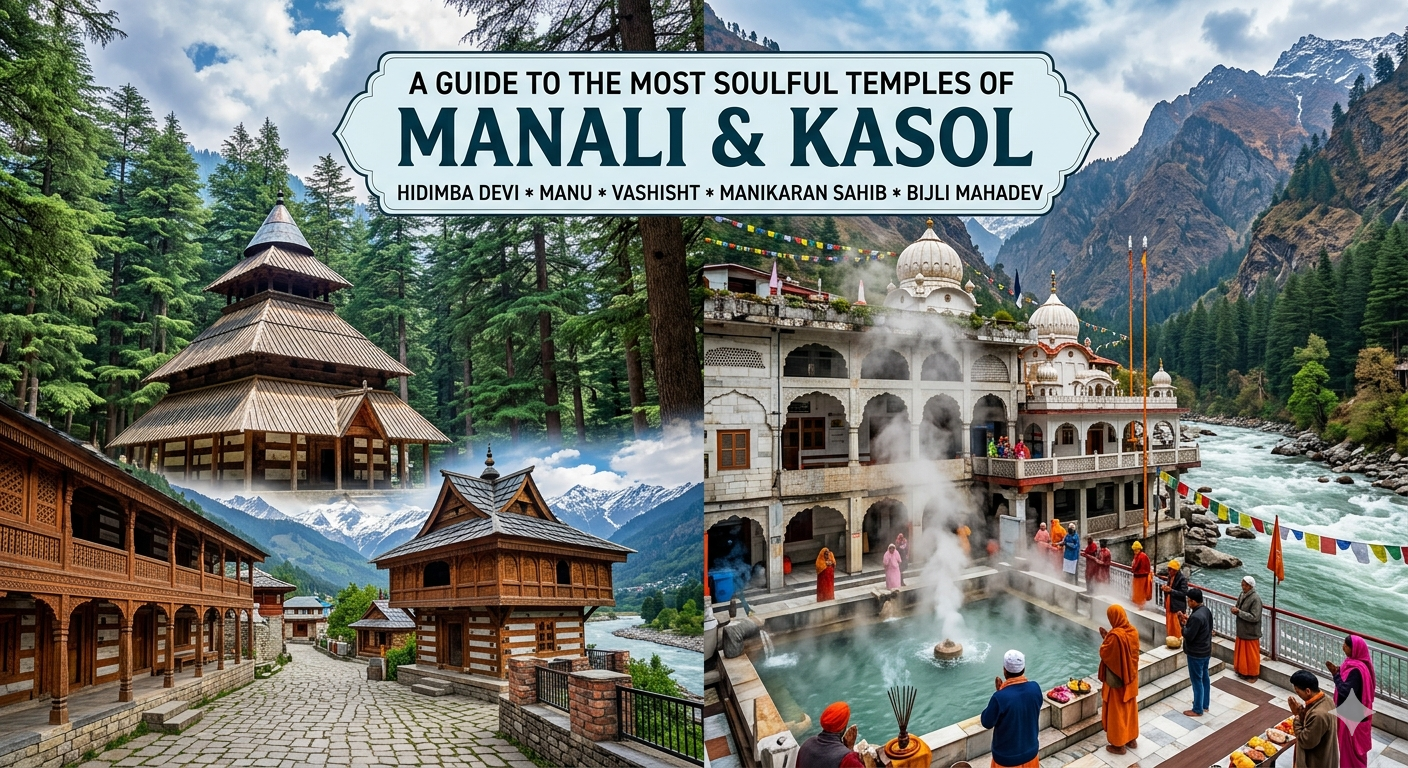
A Guide to the Most Soulful Temples of Manali and Kasol
Manali and Kasol are often considered places for outdoor fun but should also be seen as spiritual places with a long history that has drawn sages to them throughout time.
Visiting the “Valley of Gods” is not just a slogan; it is a fact. If you are going to book a trip through Voyagers' Beat, you must take a moment to experience the peaceful atmosphere in the cedar-scented courtyards of the many temples located in both towns. This will provide you with an excellent overview of the most important temples in Manali and Kasol.
The Spiritual Giants of Manali
Manali is the entry point to some of the most architecturally distinct temples located in northern India. Most temples are constructed in the traditional style of wood and stone known as 'Kath-Kuni' that is uniquely built to endure the harsh climate of the Himalayan winter.
1. Hidimba Devi Temple - Pagoda of the Forests
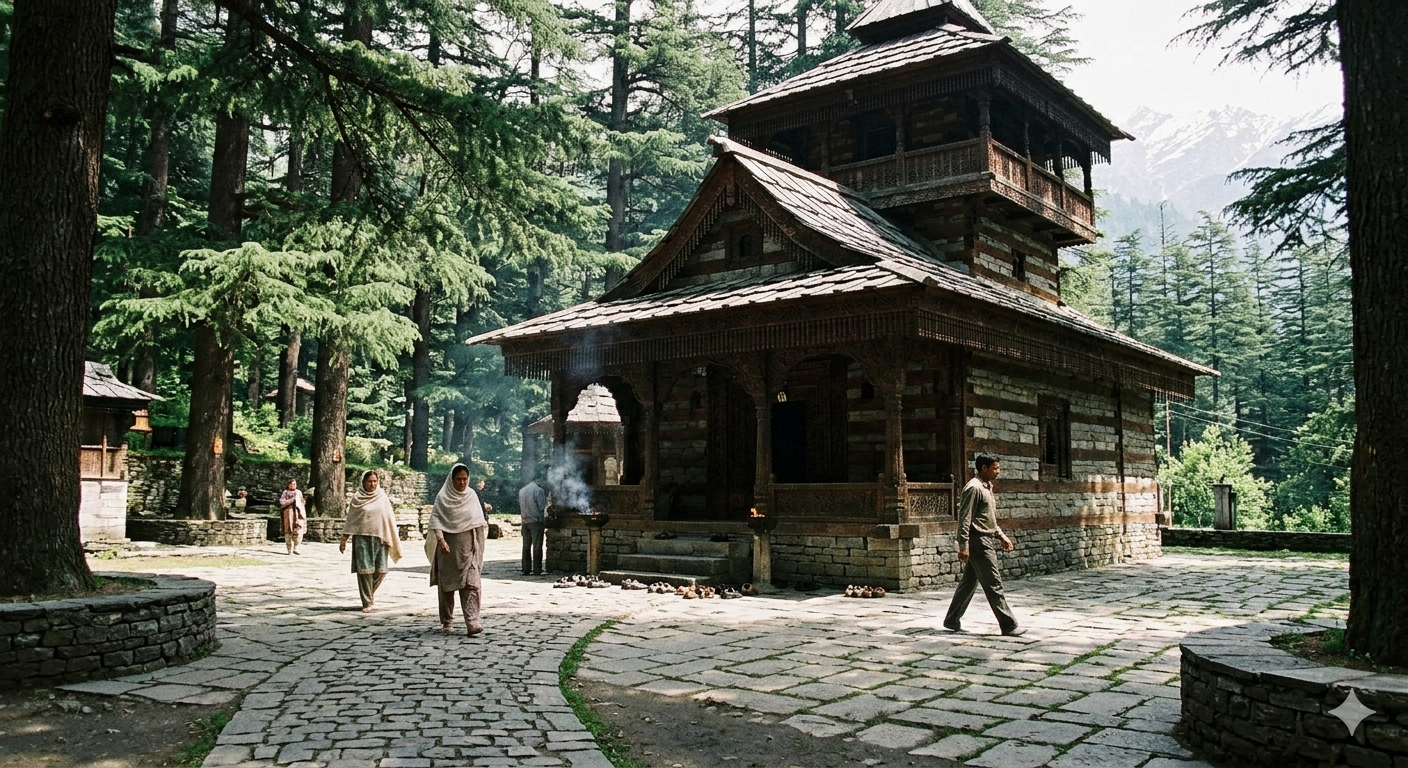
The Hidimba Devi Temple has been named perhaps the most well-known landmark in Manali. The building is an exquisite four-level wooden pagoda located in the heart of a large cedar (Cedrus deodara) forest (Dhungri Van Vihar) built in 1553 in honour of Goddess Hidimba, wife of Bhima, from the Mahabharata.
Reasons to Visit: The interior and exterior wood carvings of animals and deities are an absolute masterpiece of mediaeval craftsmanship, and the serene stillness of the forest, along with the fragrant incense, creates an ethereal atmosphere.
2. Temple of Manu - Patronage by the Original Creator of Humanity
Located in Old Manali, the Manu (Manu Temple) is one of the world's oldest temples to Sage Manu (the original creator of humanity). And, being that "Man-allah" (Manu is the word for man), Manali derived its name from the same root word as the name "Manu" – "Manu-alaya" (Abode of Manu).
- Reasons to visit: There are only two temples in India that are dedicated exclusively to sage Manu, and therefore, they both have cultural significance. The temple also has incredible views of the Beas River and surrounding valley when walking through the cobble-stone streets of Old Manali.
3. Vashisht Temple and Hot Springs
The Vashisht Temple is a 4,000-year-old temple that belongs to the Sage Vashisht, the guru to Lord Rama, and Vashisht's Hot Springs are well known for their natural sulphur springs.
- Experience: Both local people and travellers have come here to immerse themselves in these medicinal hot water springs to cure their skin conditions and relieve aching muscles following a long hike or trek.
Kasol and the Parvati Valley Are Magical Places
Kasol has been referred to as the 'Mini-Israel of India', but its roots run deep into the Parvati River, also known as the Parvati cascade. The story behind the river is rich in culture, mythology, and history.
4. Where Faith Cannot Be Explained: Manikaran Sahib
Manikaran, a mere four kilometres from Kasol, is one of the largest pilgramage sites for both Sikhs and Hindus. While there, you can visit a Gurudwara as well as the Shiva Temple, both of which rest over some very powerful geothermal springs.
- The Mighty: The food served in the Langar (communal kitchen) at the Guru Dwara is cooked on the hot springs. The way the steam rises from the water and the glistening of the water against the backdrop of ice-covered mountains is like nothing you will ever see before.
5. Temple of Lightning (Bijli Mahadev)
Located between Kullu and the way to Kasol, this temple can be reached by a 3-km trek. It was built in honour of Lord Shiva. The temple's 60-foot-long staff is said to draw lightning from heaven and break the Shiva lingam. The priest then replaces the broken lingam with butter.
- Tip: This place is great for a panoramic view of Kullu and Parvati valleys.
The Ideal Period for Visiting
Timing is everything to enjoy these temples at their maximum splendour:
- March-June: Weather that is generally pleasant with bright blue skies and blooming rhododendrons.
- September-November: Crisp fall breezes with fewer tourists for individuals seeking peace and tranquillity.
- Winter (Dec-Feb): If you are hoping to witness these ancient structures covered in snow, this is a good time; however, some treks (i.e., Bijli Mahadev) may be difficult.
The Divine Journey - Planning to Travel to These Temple Locations
Visiting the temples in the towns of Manali & Kasol is not only an opportunity for sightseeing but also an experience into the myths and legends pertaining to the temples in these areas of the Himalayas. Whether it is the sacred hot spring waters at 'Vashisht' or the soothing splendour of the forest at 'Dhungri', both areas provide visitors with a sense of serenity that will last long after their visit has ended.
Pack Your Bags & Get Ready! Check out the Ultimate Manali Kasol Travel Guide 2018 for helpful hints on the best places to eat and explore along with a list of hidden treks and inexpensive accommodation options for your 2026 visit.
Before you head to your next temple visit, check out these travel tips!
Respectful Clothing – When you enter a temple, make sure that both your shoulders and knees are covered.
- Leave Your Shoes Outside – Please remember to always take your shoes off when you enter the temple.
- Photography is Not Allowed – Some of the inner sanctums in some temples do not allow photography. Look for signs or just ask the priest before taking any pictures.
- Stay Hydrated – Even if it is spiritually related, it can be hard to go hiking at high elevations, so make sure you drink plenty of water.
Voyagers' Beat can help you get closer to the heart of the mountains. Let the divine energy of Himachal help make your next getaway to the mountains one to remember.